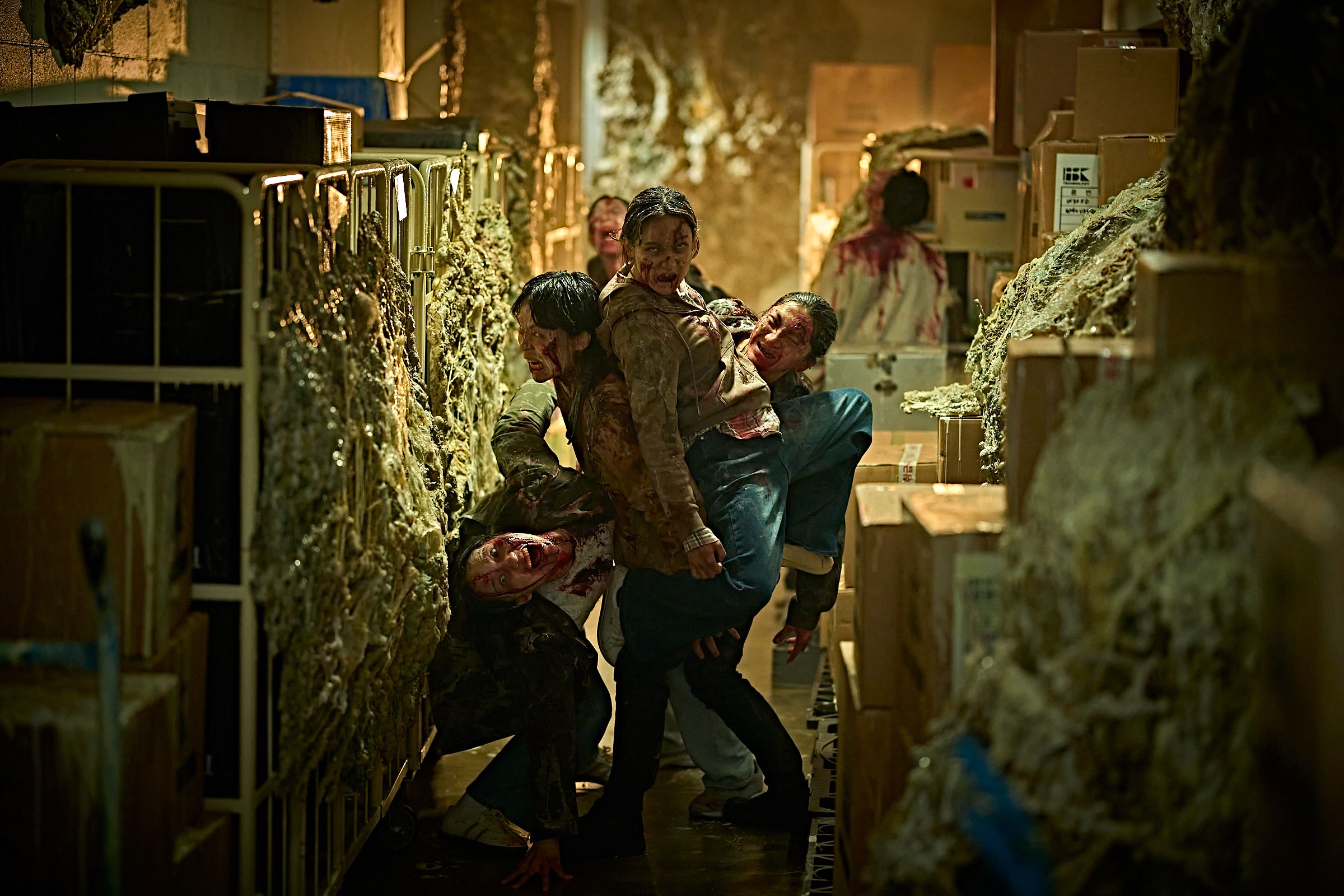
Yeon Sang-ho, the visionary South Korean filmmaker behind the critically acclaimed ‘Train to Busan,’ is returning to the zombie genre with his latest project ‘Colony,’ set to arrive in U.S. theaters on August 28, 2025. The new film presents a fresh and scientifically grounded take on the undead, featuring zombies infected with a genetically engineered fungus that transforms them into a collective hivemind capable of sharing information and evolving as a unified organism. This innovative concept reportedly draws significant inspiration from a 48-year-old science fiction masterpiece, demonstrating how classic genre works continue to influence contemporary filmmaking.
In ‘Colony,’ the traditional zombie narrative undergoes a significant transformation. Rather than presenting mindless, shambling corpses driven purely by instinct, Yeon’s undead creatures grow progressively more intelligent as their numbers increase. The fungal infection allows them to communicate and coordinate their attacks, creating an enemy that adapts and learns from each encounter with survivors. This biological approach to the zombie mythology echoes real-world phenomena such as the Ophiocordyceps fungus, which infamously manipulates ant behavior in nature, a concept that has captured public imagination through various media in recent years.
A Master Filmmaker Returns to His Roots
Yeon Sang-ho first captured international attention with ‘Train to Busan’ in 2016, a film that revitalized the zombie genre by combining intense action sequences with genuine emotional depth. The movie, set almost entirely on a speeding train during a zombie outbreak, grossed over $98 million worldwide and became one of the highest-grossing Korean films of all time. It earned widespread critical acclaim for its character development and social commentary, examining class divisions and human nature under extreme pressure. The director followed this success with an animated prequel, ‘Seoul Station,’ and a sequel, ‘Peninsula,’ in 2020, though the latter received more mixed reviews.
What sets Yeon apart from other horror directors is his ability to use genre conventions as a vehicle for deeper social commentary. In ‘Colony,’ he cleverly juxtaposes the evolution and increasing intelligence of the zombie hivemind against his human characters, who descend into panic, selfishness, and infighting as their situation becomes more desperate. This thematic contrast serves as a pointed observation about human nature and society’s fragility when confronted with existential threats. While the infected grow stronger through unity and cooperation, the survivors fracture and weaken through their inability to work together.
Drawing From Science Fiction’s Golden Age
The 48-year-old science fiction masterpiece that reportedly inspired ‘Colony’ appears to reference works from the late 1970s, a period often considered a golden age for thoughtful, concept-driven science fiction cinema. This era produced landmark films that explored themes of biological horror, collective consciousness, and humanity’s relationship with nature and technology. Movies like ‘Invasion of the Body Snatchers’ (1978) and ‘Alien’ (1979) established templates for depicting organisms that operate outside human understanding, creating horror from the unknown aspects of biology rather than supernatural elements.
The concept of a fungal hivemind also draws from decades of scientific research and speculation about collective intelligence in nature. From ant colonies to mycelium networks connecting forest ecosystems, scientists have long studied how organisms achieve complex behaviors through distributed consciousness. By grounding his zombie mythology in these real-world phenomena, Yeon creates a threat that feels more plausible and therefore more unsettling than traditional supernatural explanations. This scientific approach represents a growing trend in modern horror, where filmmakers seek to create scares that resonate with contemporary anxieties about disease, environmental collapse, and genetic manipulation.
The Evolution of Zombie Cinema
The zombie genre has undergone remarkable transformations since George Romero’s ‘Night of the Living Dead’ established its modern conventions in 1968. From slow-moving metaphors for consumerism to the fast-running infected of ’28 Days Later,’ each generation of filmmakers has found new ways to make the undead reflect contemporary fears. Yeon’s contribution to this evolution has been significant, and ‘Colony’ appears poised to push boundaries further by introducing concepts of networked intelligence and biological adaptation that speak to modern anxieties about artificial intelligence, pandemic diseases, and loss of individual identity.
As audiences prepare for ‘Colony’s’ theatrical release, expectations are high for another genre-defining work from one of contemporary cinema’s most innovative horror directors. The film’s unique premise, combining cutting-edge biological concepts with classic science fiction influences, suggests a movie that will appeal both to hardcore horror fans and viewers seeking thoughtful, socially relevant storytelling. Whether ‘Colony’ can match the cultural impact of ‘Train to Busan’ remains to be seen, but Yeon’s track record suggests audiences are in for a thrilling and intellectually stimulating experience.
Expert Opinion: Yeon Sang-ho’s decision to ground his zombie mythology in fungal biology rather than supernatural causes reflects a broader shift in horror cinema toward science-based threats that mirror real-world anxieties about pandemics and environmental catastrophe. If ‘Colony’ successfully executes its high-concept premise while maintaining the emotional resonance that made ‘Train to Busan’ a global phenomenon, it could establish a new template for intelligent horror filmmaking that prioritizes biological plausibility over genre conventions.