
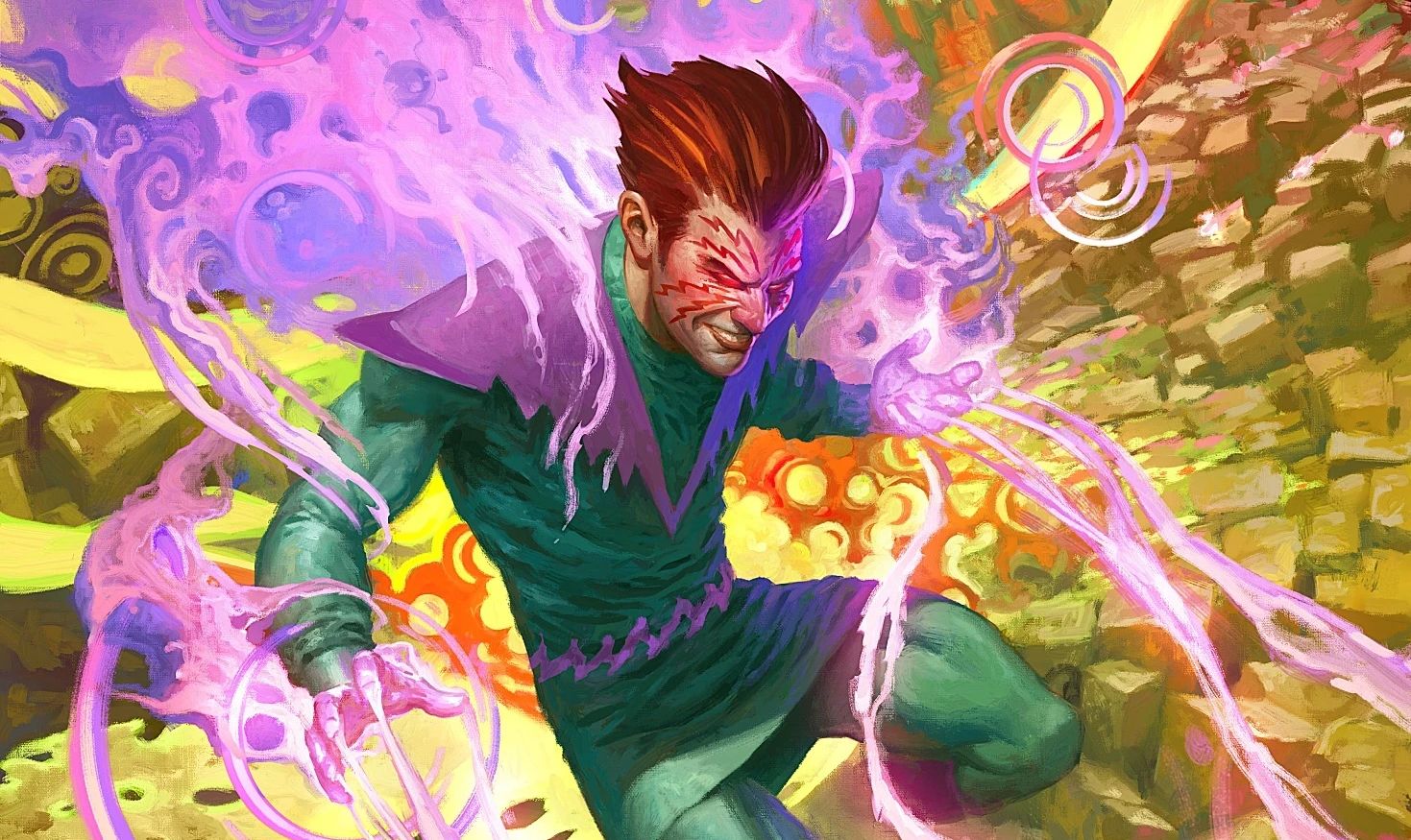
Magic: The Gathering’s latest crossover set, Marvel Super Heroes, has arrived with an impressive roster of legendary creatures ready to lead Commander decks into battle. While players might instinctively gravitate toward household names like Iron Man, the Incredible Hulk, Spider-Man, or Captain America, seasoned veterans of the format are already sounding the alarm about a far more obscure character who threatens to dominate the meta in the most frustrating way possible: Molecule Man.
The Marvel Super Heroes collaboration represents one of the most ambitious Universes Beyond releases Wizards of the Coast has ever undertaken. With dozens of iconic characters translated into playable Magic cards, the set has generated enormous excitement among both comic book fans and competitive players. However, as the community digs deeper into the card pool, it’s becoming clear that the most powerful option might not be the flashiest Avenger or the most recognizable villain—it’s a relatively obscure character whose abilities translate into one of the most tedious gameplay experiences imaginable.
Who Is Molecule Man and Why Should You Fear Him?
Molecule Man, also known as Owen Reece, first appeared in Fantastic Four #20 back in 1963. In Marvel Comics lore, he possesses the ability to mentally manipulate molecules, giving him virtually unlimited power over matter itself. This makes him one of the most powerful beings in the Marvel universe, despite his relative obscurity compared to mainstream heroes and villains. His translation into Magic: The Gathering captures this reality-warping potential in a way that makes him exceptionally difficult to defeat in Commander games.
The card’s design appears to incorporate mechanics that create an almost impenetrable defensive position while simultaneously grinding opponents down through incremental advantage. Early reports from playtest groups suggest that games involving Molecule Man tend to stretch into marathon sessions, with the controlling player establishing lock states that prevent meaningful interaction while slowly accumulating resources toward an inevitable victory. This style of play, while technically legal and strategically sound, represents exactly the kind of experience that many Commander players actively try to avoid.
The Commander Format’s Ongoing Battle Against Tedium
Commander, Magic’s most popular format, has always struggled with balancing powerful strategies against enjoyable gameplay experiences. The format’s social contract emphasizes fun and interaction over pure competitive dominance, but cards like Molecule Man challenge these community norms. The Rules Committee and Wizards of the Coast have historically intervened when cards create consistently negative play patterns, with notable bans including cards that generate excessive turns, create unbreakable locks, or simply make games take too long to complete.
The history of problematic Commander cards includes infamous examples like Leovold, Emissary of Trest, who was banned for creating oppressive gameplay, and more recently, cards from various Universes Beyond sets that pushed power levels beyond acceptable thresholds. Molecule Man appears to follow in this tradition, offering a combination of abilities that, while perhaps balanced in theory, create practical gameplay scenarios that few opponents will enjoy sitting through. The card’s design seems to reward patience and resource management to such an extreme degree that opposing players may find themselves unable to meaningfully participate in the game.
Community Reaction and Competitive Implications
Social media and Magic community forums have already begun debating whether Molecule Man represents a design mistake or simply a powerful option that players will need to adapt to. Some argue that Commander’s casual nature means players can simply refuse to play against the deck, while others contend that such powerful options inevitably warp local metagames and create feel-bad moments at game stores and events. The card’s existence also raises questions about how Wizards of the Coast approaches power level in crossover sets, where the desire to accurately represent beloved characters sometimes conflicts with healthy game design.
For players looking to compete at the highest levels of Commander, understanding how to either pilot or defeat Molecule Man decks will likely become essential knowledge in the coming months. The Marvel Super Heroes set has introduced numerous exciting options for deck builders, but this unassuming villain may prove to be the most format-defining card of them all—for better or worse.
Expert Opinion: Molecule Man represents a growing tension in Magic’s design philosophy between faithful character representation and healthy gameplay. If early concerns prove accurate, expect either significant Rule 0 discussions at local playgroups or potential consideration for the Commander ban list within the next six to twelve months. Wizards of the Coast may need to reconsider how they translate omnipotent comic book characters into a multiplayer format built around social enjoyment.