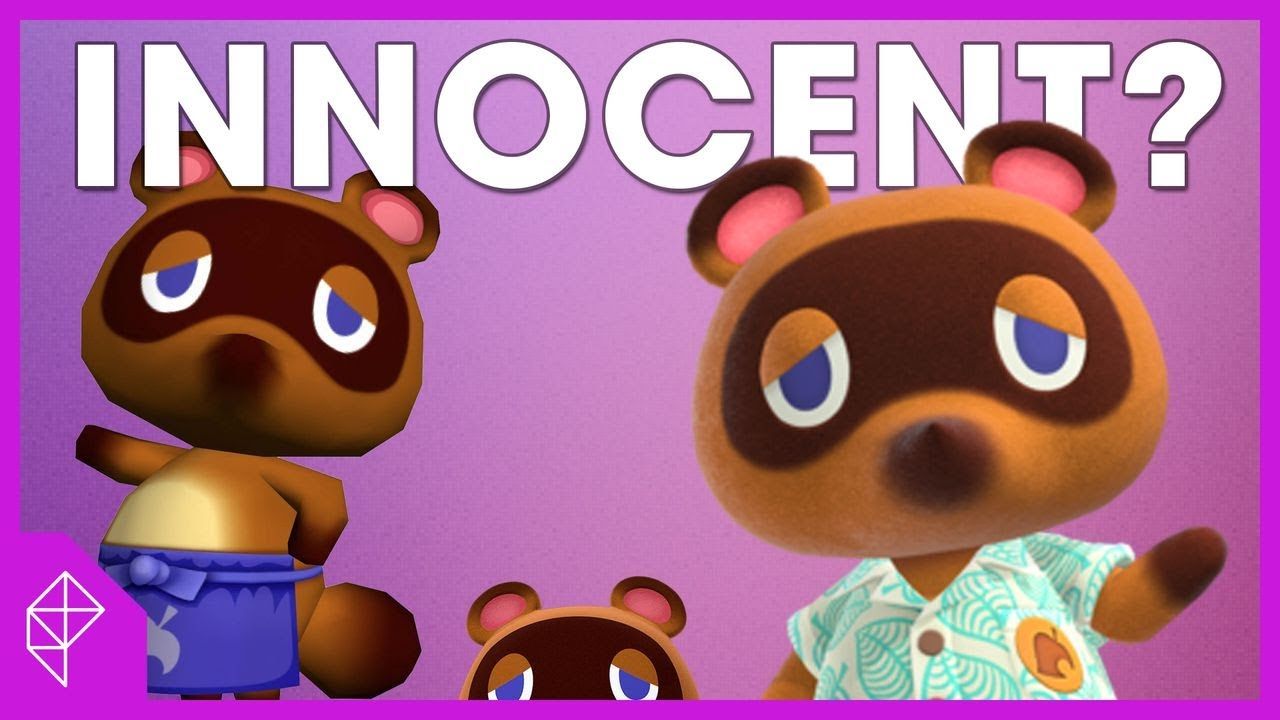
In the world of video games, few characters have sparked as much debate as Tom Nook, the seemingly affable raccoon (or tanuki, to be precise) who serves as the primary real estate mogul in Nintendo’s beloved Animal Crossing franchise. Since the series debuted in Japan in 2001, players have questioned whether this bushy-tailed businessman is a benevolent benefactor helping villagers achieve their dreams of homeownership, or a calculating capitalist engaged in predatory lending practices designed to keep players perpetually indebted. The truth, as with most complex characters, lies somewhere in between, and understanding Tom Nook requires examining his evolution throughout the franchise’s history.
The controversy surrounding Tom Nook stems from his fundamental role in every Animal Crossing game: he provides players with their initial home and subsequently offers upgrades, all financed through loans that players must repay. At first glance, this arrangement appears exploitative. Players arrive in a new village with nothing, only to immediately find themselves hundreds of thousands of bells in debt to a character who seems to profit handsomely from their labor. The internet has not been kind to Tom Nook, spawning countless memes depicting him as a loan shark, a mafia boss, or worse. However, a closer examination of his actual lending practices reveals a remarkably different picture.
The Economics of Tom Nook’s Lending Model
Unlike real-world predatory lenders, Tom Nook operates under terms that would make any financial institution jealous—or bankrupt. His loans carry zero percent interest, a feature unheard of in actual real estate financing. There are no payment deadlines, no late fees, no credit checks, and absolutely no threat of foreclosure. Players can take years, even decades of in-game time, to repay their mortgages without facing any consequences whatsoever. In essence, Tom Nook provides interest-free financing with infinite repayment terms to individuals with no credit history, no employment verification, and no collateral beyond the property itself. By conventional financial standards, this is not predatory lending—it is practically charitable housing assistance.
Furthermore, Tom Nook’s business model has evolved significantly throughout the franchise. In the original Animal Crossing and its immediate sequels, Nook ran the village’s general store, where players could both sell items and purchase goods. The prices he offered for player-sold items were certainly below retail value, but this reflects standard consignment practices rather than exploitation. More importantly, in Animal Crossing: New Horizons, released in 2020, Nook has expanded his enterprise to become a full-service development company, Nook Inc., which handles not just housing but entire island development projects. His role has shifted from small-town shopkeeper to something resembling a benevolent infrastructure developer.
Historical Context and Character Development
Understanding Tom Nook also requires appreciating his cultural origins. As a tanuki, he draws from Japanese folklore where these raccoon-dogs are associated with prosperity, luck, and transformation. Tanuki statues are commonly placed outside Japanese businesses to attract good fortune. This cultural context suggests that Nintendo intended Tom Nook to be a positive figure from the outset, despite Western interpretations that cast him as villainous. Additionally, dialogue within the games reveals glimpses of Tom Nook’s backstory that paint him in a more sympathetic light. References throughout the series suggest he once harbored dreams beyond shopkeeping, possibly involving his former friend Redd, the somewhat shady art dealer. Some fans theorize that a failed business venture or betrayal in his past shaped his current cautious but ultimately generous approach to helping new villagers.
The games also show Tom Nook’s softer side through his relationship with his nephews, Timmy and Tommy. These young tanuki work in his shop, and dialogue suggests Nook took them in and is teaching them the family business. This mentorship role contradicts the image of a ruthless capitalist, instead suggesting someone invested in community and family. In New Horizons, his Nook Miles rewards program actually incentivizes players to explore, socialize, and improve their islands—activities with no direct benefit to his bottom line. These design choices indicate that Nintendo has consistently positioned Tom Nook as a facilitator of player enjoyment rather than an obstacle to overcome.
The Verdict on Tom Nook
Ultimately, the perception of Tom Nook as a predatory lender says more about players’ real-world anxieties regarding debt and housing costs than it does about the character himself. In an era of crushing student loans, unaffordable housing markets, and legitimate predatory financial practices, it is perhaps natural to view any debt-imposing character with suspicion. However, Tom Nook’s actual behavior—providing affordable housing, accepting payment at any pace, and reinvesting in community development—positions him as something closer to a social housing advocate than a villainous landlord. His reputation, it seems, is largely undeserved, born from meme culture rather than meaningful analysis of his in-game actions.
Expert Opinion: From a game design perspective, Tom Nook serves as a brilliant progression mechanic disguised as a character, giving players long-term goals without punishing casual engagement. His evolution across the franchise reflects Nintendo’s growing awareness of how players perceive financial systems in games, leading to increasingly generous terms that maintain engagement while minimizing frustration. As gaming communities continue to analyze characters through real-world lenses, Tom Nook stands as a fascinating case study in how cultural context and internet culture can dramatically reshape character perception.