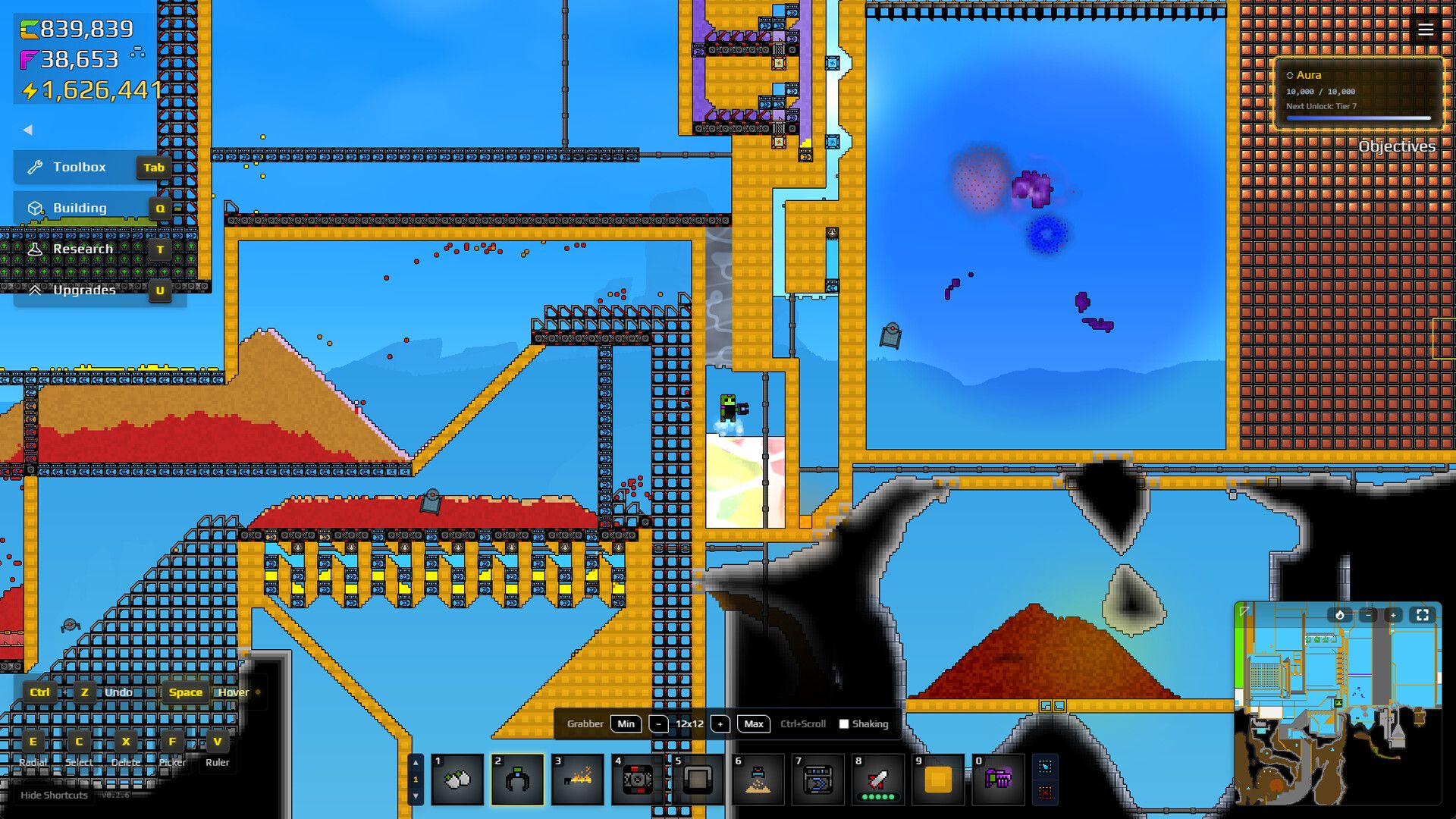
The automation game genre has become increasingly codified over the past decade, with developers and players alike settling into comfortable expectations of conveyor belts, assembly lines, and factory-building mechanics. However, a new title called Sandustry is challenging these conventions by taking the genre in a distinctly different direction, focusing on excavation and mining rather than traditional manufacturing. The game’s launch trailer reveals a fresh take on automation that could redefine what players expect from this increasingly popular genre.
Gaming genres tend to become standardized over time as successful formulas emerge and developers iterate on proven concepts. Soulslike games emphasize precise parrying in dark, atmospheric worlds. Character action titles prioritize cinematic combat sequences. Farming simulators incorporate life-sim socialization elements. The automation genre, despite being relatively young in its current form, has similarly developed its own set of expectations that nearly every entry adheres to faithfully.
The Evolution of Automation Games
The modern automation game can trace its origins to 2011’s SpaceChem, which planted the seeds for what would become a thriving genre. However, it was Factorio’s early access release in 2016 that truly crystallized the formula most players recognize today. Since then, the genre has exploded with titles like Foundry, Shapez 2, Satisfactory, and Little Rocket Lab, each adding their own unique systems while adhering to core conventions. Players entering any of these games can reasonably expect conveyor belts of various speeds, assemblers in multiple configurations, refiners to process raw materials, and interconnected production chains that grow increasingly complex.
What makes Sandustry particularly intriguing is its apparent rejection of the factory-centric approach that has dominated the genre. The key insight driving the game’s design is elegantly simple: automation doesn’t technically require a factory. While most games in the genre focus on manufacturing and assembly, Sandustry appears to concentrate on the often-overlooked extraction phase, turning mining and excavation into the primary gameplay loop rather than a mere prelude to factory construction.
Breaking Genre Conventions
This shift in focus represents a significant departure from genre norms and could attract players who have felt overwhelmed by the complexity of traditional factory builders. By centering gameplay on digging and resource extraction, Sandustry may offer a more accessible entry point while still delivering the satisfying optimization loops that automation fans crave. The game joins a growing trend of developers finding creative ways to remix established genre formulas, appealing to both newcomers and veterans seeking fresh experiences.
The timing of Sandustry’s launch is noteworthy, arriving in a market where automation games have achieved remarkable success. Factorio’s full 1.0 release in 2020 sold over three million copies, while Satisfactory recently celebrated its own successful launch after years in early access. This proven market appetite for automation experiences suggests there’s room for innovative takes on the formula, particularly ones that explore previously underutilized aspects of the industrial process.
Looking Ahead for the Genre
As the automation genre continues to mature, titles like Sandustry demonstrate that there’s still significant room for innovation and experimentation. By questioning fundamental assumptions about what an automation game should be, developers can discover entirely new gameplay possibilities hiding within familiar concepts. Whether Sandustry succeeds in carving out its own niche remains to be seen, but its willingness to challenge genre conventions makes it a title worth watching for anyone interested in the future of automation gaming.
Expert Opinion: Sandustry’s excavation-focused approach represents a healthy evolution for the automation genre, demonstrating that the core appeal of optimization and efficiency can translate beyond factory settings. If successful, this could inspire a wave of automation games exploring logistics, transportation, or other industrial processes previously considered ancillary to the main factory-building loop. The genre’s continued diversification suggests we’re entering a golden age for automation enthusiasts seeking varied experiences.