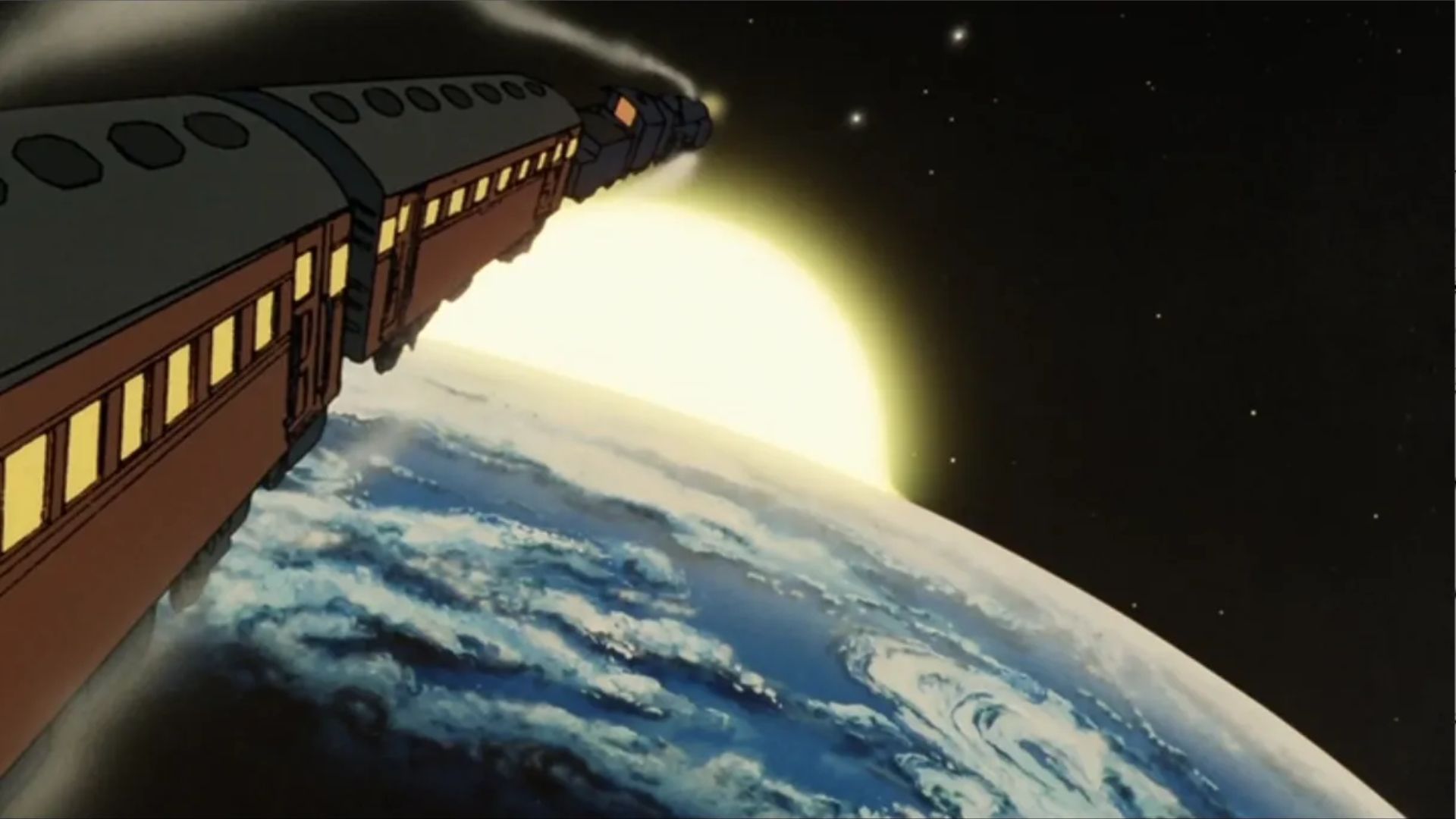
Nearly half a century after Galaxy Express 999 first carried audiences across the cosmos, one of anime’s most influential and visually stunning space adventures is preparing to embark on a new journey. In a surprise announcement posted on X on Saturday, July 25, a new theatrical Galaxy Express 999 anime film was revealed by the official account of its legendary creator, the late Leiji Matsumoto. The news has sent waves of excitement through the global anime community, as fans old and new prepare to experience the magic of this beloved franchise on the big screen once more. Toei Animation, the same studio that originally brought the project to life in 1978, is returning to produce the film, with veteran director Rintaro — who helmed the critically acclaimed 1979 Galaxy Express 999 movie — providing the story concept for this new installment.
A Legacy Written in the Stars
Galaxy Express 999 holds a special place in anime history as one of the most philosophically rich and emotionally resonant science fiction stories ever told in the medium. Created by Leiji Matsumoto, who passed away in February 2023 at the age of 85, the series follows a young boy named Tetsuro Hoshino and his mysterious companion Maetel as they travel aboard a space-faring steam locomotive called the Galaxy Express 999. Their destination: a distant planet where humans can obtain mechanical bodies and achieve immortality. Along the way, they encounter various civilizations, face moral dilemmas, and explore profound themes of mortality, humanity, and what it truly means to be alive. The original manga ran from 1977 to 1981, and its anime adaptation became a cultural phenomenon in Japan, influencing countless creators and establishing many of the visual and narrative conventions that would define space opera anime for decades to come.
The 1979 theatrical film directed by Rintaro is widely considered a masterpiece of anime cinema. It condensed the sprawling narrative into a breathtaking two-hour experience that showcased stunning hand-drawn animation and a memorable musical score. The film was both a commercial and critical success, earning numerous accolades and cementing Galaxy Express 999’s status as an essential work in the anime canon. A sequel, Adieu Galaxy Express 999, followed in 1981, and various other adaptations and spin-offs have kept the franchise alive over the years, though none have quite captured the magic of those original productions.
Rintaro Returns to the Cosmos
The announcement that Rintaro will be providing the story concept for the new film has generated considerable excitement among longtime fans. Now in his eighties, Rintaro remains one of the most respected figures in anime history, with a career spanning over six decades. Beyond Galaxy Express 999, he has directed numerous influential works including Metropolis (2001), X (1996), and various entries in the Lupin III franchise. His distinctive visual style, characterized by dynamic compositions and atmospheric storytelling, helped define the aesthetic of classic anime. Having Rintaro involved ensures that the new film will maintain a spiritual connection to the original while potentially introducing the franchise to a new generation of viewers who may be unfamiliar with Matsumoto’s work.
The decision to revive Galaxy Express 999 also serves as a fitting tribute to Leiji Matsumoto’s enduring legacy. Throughout his career, Matsumoto created an interconnected universe of works including Space Battleship Yamato, Captain Harlock, and Queen Emeraldas, all of which shared thematic elements and occasionally crossed over with one another. His distinctive character designs, featuring tall, ethereal women and determined young protagonists, became instantly recognizable hallmarks of his style. The announcement coming through his official account suggests that this production has the blessing of his estate and creative partners, ensuring that his vision will be honored in this new adaptation.
What Lies Ahead for the Franchise
While specific details about the new film’s plot, release date, and cast remain scarce, the involvement of Toei Animation provides reassurance that the production will have substantial resources behind it. Toei has a long history with the franchise and possesses the institutional knowledge necessary to handle such an important property with care. The studio has also demonstrated its ability to successfully revive classic franchises for modern audiences, as seen with recent Dragon Ball productions and other nostalgic revivals. Industry analysts suggest that the timing may be particularly favorable, as there has been renewed global interest in classic anime properties, driven partly by streaming platforms introducing older titles to international audiences and partly by a growing appreciation for the artistic achievements of anime’s golden age.
For fans who have waited nearly five decades for a worthy continuation of Tetsuro and Maetel’s journey, this announcement represents the fulfillment of a long-held dream. The Galaxy Express 999 is preparing to depart once more, promising to carry a new generation of passengers on an unforgettable voyage through the stars. As the anime industry continues to balance innovation with reverence for its rich history, this revival stands as a testament to the timeless appeal of Matsumoto’s vision — a reminder that some stories are simply too beautiful to remain at the station forever.
Expert Opinion: This revival represents more than mere nostalgia — it signals the anime industry’s recognition that classic philosophical science fiction still resonates with modern audiences seeking depth beyond contemporary action-focused productions. With Rintaro’s involvement and Toei’s resources, this film could potentially introduce Matsumoto’s humanist themes about mortality and identity to a generation grappling with similar questions in an age of artificial intelligence and transhumanism. The project’s success could catalyze further revivals of Japan’s rich catalog of thoughtful science fiction anime.