
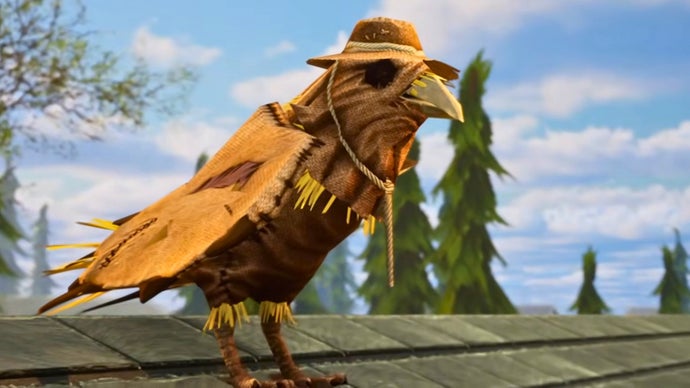
Life as a bird isn’t easy. You have a cozy nest, lay your eggs peacefully, and want nothing more than to spend the entire day sitting on them with your feathered posterior. But then, without warning, a merciless war begins. Welcome to Birds of War, one of the most unconventional multiplayer shooters to emerge in recent memory, where avian combatants engage in brutal aerial warfare over the most precious resource of all: eggs.
The game features intense 3v3v3 aerial combat from a third-person perspective, where three teams of birds compete to control the most eggs within each match. But these aren’t your friendly neighborhood sparrows having a polite disagreement. These feathered fighters will stop at nothing to achieve total egg supremacy. They steal eggs from rival nests, bomb enemy territories, and engage in beak-to-beak combat that would make even the most aggressive seagull blush. The stakes are high, the action is fast, and apparently, if you choose to play as the hummingbird class, you’ll find yourself universally despised by the player community.
A New Breed of Multiplayer Chaos
What sets Birds of War apart from conventional shooter games isn’t just its avian cast of characters, but its unique approach to communication. In a design choice that hearkens back to the chaotic early days of online gaming, the game features permanently open microphones for all players. This means every taunt, every frustrated squawk, and every triumphant chirp is broadcast not just to your teammates, but to your enemies as well. This creates an atmosphere of psychological warfare that adds an entirely new dimension to the gameplay experience, reminiscent of the proximity chat systems that made games like DayZ and Rust notorious for their intense player interactions.
The concept of class-based warfare with birds draws from a rich history of creative character design in competitive games. Much like Team Fortress 2 revolutionized the genre with its distinct character classes, Birds of War appears to offer different bird species with unique abilities and playstyles. The hummingbird class, in particular, seems to have earned a notorious reputation among players. While specific details about why this class generates such animosity remain somewhat mysterious, it likely stems from gameplay mechanics that other players find frustrating to counter—perhaps the tiny birds are difficult to hit, or possess abilities that disrupt the flow of combat in annoying ways.
The Evolution of Unconventional Shooters
Birds of War joins a growing trend of shooters that abandon traditional military themes for more creative premises. Games like Goat Simulator, Untitled Goose Game, and Crab Game have demonstrated that players are hungry for experiences that break the mold of conventional game design. The success of these titles proves that a unique concept, combined with solid gameplay mechanics, can capture the imagination of the gaming community in ways that another generic military shooter simply cannot. By placing players in the feathers of warring birds, the developers have tapped into both the humor and competitive drive that make multiplayer games so engaging.
The egg-based objective system also represents an interesting twist on traditional capture-the-flag or king-of-the-hill game modes. Instead of simply holding territory, players must actively manage their egg collection while simultaneously attempting to raid enemy nests. This creates a dynamic push-and-pull gameplay loop where no team is ever truly safe, and comebacks are always possible until the final moments of a match. The combination of aerial mobility, resource management, and direct combat offers a surprisingly deep tactical experience wrapped in an absurdist package.
Community Reception and Future Prospects
Early reactions to Birds of War suggest that the game has found its niche among players seeking something different from the mainstream shooter landscape. The open microphone feature, while potentially toxic in the wrong hands, has reportedly led to memorable moments of cross-team banter and unlikely alliances forming mid-match. Whether Birds of War can maintain its momentum and build a lasting community remains to be seen, but its willingness to embrace chaos and creativity positions it as a potential sleeper hit in the competitive gaming space. For now, players continue to flock to the skies, ready to defend their eggs at any cost—just maybe not as the hummingbird class, unless they’re prepared to face the wrath of the entire server.
Expert Opinion: Birds of War represents a fascinating experiment in multiplayer game design, combining asymmetric class warfare with social dynamics through its open microphone system. The game’s success will likely depend on its ability to balance the controversial hummingbird class while maintaining the chaotic fun that defines its core experience. If developers continue to embrace community feedback and refine the experience, this could become a cult classic in the party game genre.