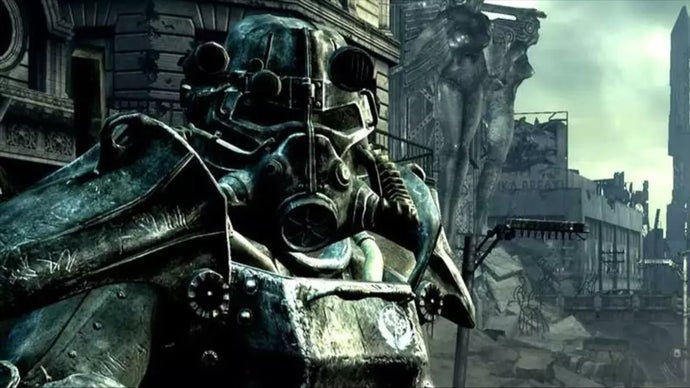
Following the official confirmation of a Fallout 3 remaster in mid-July, former Bethesda developer Nathan Purkeypile has shared his thoughts on the project, suggesting it could be an opportunity to finally implement the original vision the development team had for the game. The return to the Capital Wasteland may prove to be far more substantial than a simple technical refresh, potentially incorporating features and content that were cut from the 2008 release due to time and technical constraints.
Purkeypile, who worked at Bethesda Game Studios for over 14 years as a senior artist and world builder, contributed to numerous titles including Fallout 3, Fallout 4, and Skyrim before departing to found his own studio. His insider perspective on the original development process gives weight to his observations about what the remaster could achieve. According to his statements, the original Fallout 3 had numerous ambitious ideas that never made it into the final product, and a modern remaster with updated technology could finally bring these concepts to life.
The Original Fallout 3: Ambitions and Compromises
When Fallout 3 launched in October 2008, it represented Bethesda’s bold reimagining of the beloved isometric RPG series into a fully three-dimensional open-world experience. The game transported players to the ruins of Washington D.C. two centuries after nuclear war, introducing iconic locations like the Lincoln Memorial, the Washington Monument, and the underground Metro tunnels that became synonymous with the Capital Wasteland experience. Despite its critical acclaim and commercial success, selling millions of copies and winning numerous Game of the Year awards, the development team had to make significant compromises to ship the game on schedule.
The limitations of seventh-generation console hardware, particularly the PlayStation 3 and Xbox 360, forced developers to scale back their ambitions. Draw distances were limited, environmental detail had to be carefully managed, and certain gameplay systems were simplified or removed entirely. Former team members have previously discussed cut content including additional quests, expanded companion storylines, more detailed environmental storytelling, and gameplay mechanics that couldn’t be properly implemented with the technology available at the time.
What a Modern Remaster Could Bring
The announcement of the Fallout 3 remaster comes at a particularly opportune moment for the franchise. The recent success of the Fallout television series on Amazon Prime Video has reignited interest in the post-apocalyptic universe, bringing millions of new fans to the franchise while rekindling nostalgia among veteran players. This renewed attention, combined with the capabilities of current-generation hardware like the PlayStation 5 and Xbox Series X, creates ideal conditions for a comprehensive remaster that goes beyond simple graphical improvements.
Modern remastering techniques allow developers to not only enhance visual fidelity but also to expand game worlds, improve artificial intelligence, add quality-of-life features, and restore cut content. Recent examples like the Final Fantasy VII Remake and Dead Space Remake have demonstrated that revisiting classic titles can result in experiences that honor the original while delivering something genuinely new. If Bethesda takes a similar approach with Fallout 3, players could explore a Capital Wasteland that finally matches what the developers originally envisioned nearly two decades ago.
The Broader Context of Gaming Remasters
The gaming industry has seen a significant surge in remasters and remakes over the past several years, driven by both technological advancement and consumer demand for beloved classics updated for modern systems. Titles like Resident Evil 4, The Last of Us Part I, and System Shock have shown that there’s substantial appetite for reimagined versions of influential games. For Fallout 3, which is often cited as one of the most important RPGs of its generation and a game that introduced countless players to the franchise, the potential audience for a well-executed remaster is enormous.
Bethesda’s parent company, Microsoft, has made significant investments in preserving and updating classic gaming experiences, making a substantial Fallout 3 remaster a strategic fit for their broader gaming portfolio. With the original game now over sixteen years old and increasingly difficult to run on modern systems without community patches and modifications, an official remaster addresses both preservation concerns and commercial opportunities. Whether the final product will fulfill the ambitious possibilities that Purkeypile envisions remains to be seen, but the foundation for something special is clearly in place.
Expert Opinion: Given Microsoft’s resources and the current Fallout renaissance sparked by the TV series, this remaster likely represents more than a quick cash-in. The involvement of developers who understand the original vision, combined with modern hardware capabilities, suggests Bethesda may deliver a definitive edition that addresses long-standing fan requests while introducing the Capital Wasteland to a new generation. Expect announcements about expanded content and restored features as the project develops.